Selecting the right Automatic License Plate Recognition (ALPR) system often feels like evaluating identical specs on a spreadsheet. In practice, real-world conditions—such as road grime, blinding headlight glare, or awkward camera angles—instantly separate the weak from the strong. To achieve dependable recognition, the underlying software architecture is the single most important factor.
Evaluating Plate Recognizer against DTK Software highlights a fundamental shift in industry technology: the transition from legacy pattern-matching software development kits (SDKs) to modern, deep-learning artificial intelligence. While traditional toolkits like DTK Software have served as reliable options for clean, highly controlled environments, they carry heavy developer overhead and rigid physical installation requirements.
For operations requiring rapid deployment and resilient accuracy, Plate Recognizer offers a streamlined alternative. Utilizing an AI engine trained on diverse global datasets, it bypasses the physical limitations and compilation complexities of traditional desktop LPR SDKs.
Let’s analyze why moving past rigid, developer-heavy toolkits to a modern machine learning engine ensures higher accuracy, richer data depth, and a significantly faster path to deployment.
Plate Recognizer vs DTK Accuracy Comparison
Traditional ALPR engines like DTK Software rely on classic computer vision. These legacy systems operate on strict pixel-level rules, searching for high-contrast edges and comparing character shapes to static, pre-programmed templates. While this rigid approach works under ideal conditions—such as clean plates, centered cameras, and consistent lighting—real-world environments rarely cooperate. Road grime, bent plates, and intense glare frequently cause legacy engines to generate misreads or miss plates entirely. The structural limitations of this legacy approach are documented in DTK’s official integration guidelines:
- Angle Tolerances – DTK Software requires the license plate’s horizontal tilt to be within ±10 degrees, with vertical and horizontal viewing angles not exceeding 30 degrees.
- Plate Dimensions – DTK requires the overall width of the license plate image to be at least 100 pixels within the video frame to guarantee an accurate read.
- Contrast and Lighting – The engine relies on clear illumination and sharp contrast between the text and the plate background to reliably isolate and decode the characters.
In contrast, Plate Recognizer utilizes deep learning and machine learning algorithms that fundamentally bypass these rigid constraints. Instead of relying on strict pixel rules, its AI-driven engine is trained on millions of diverse images, allowing it to accurately decode highly distorted, blurry, or dirty plates.
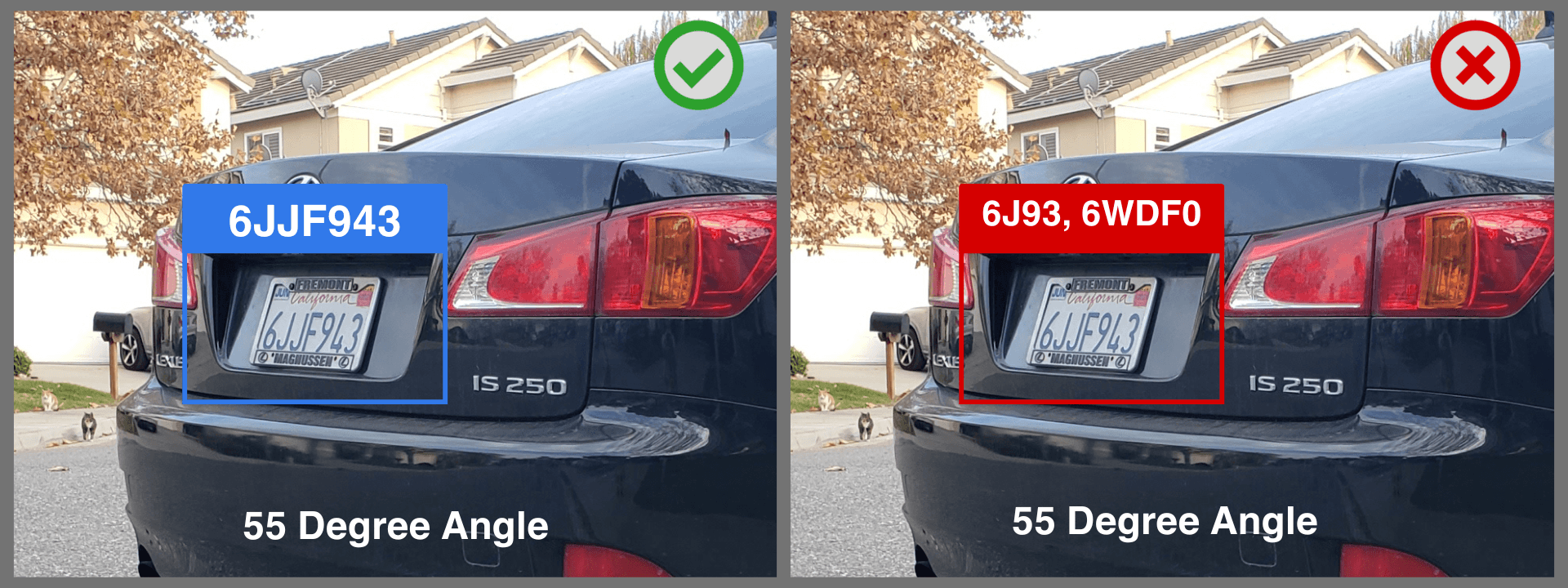
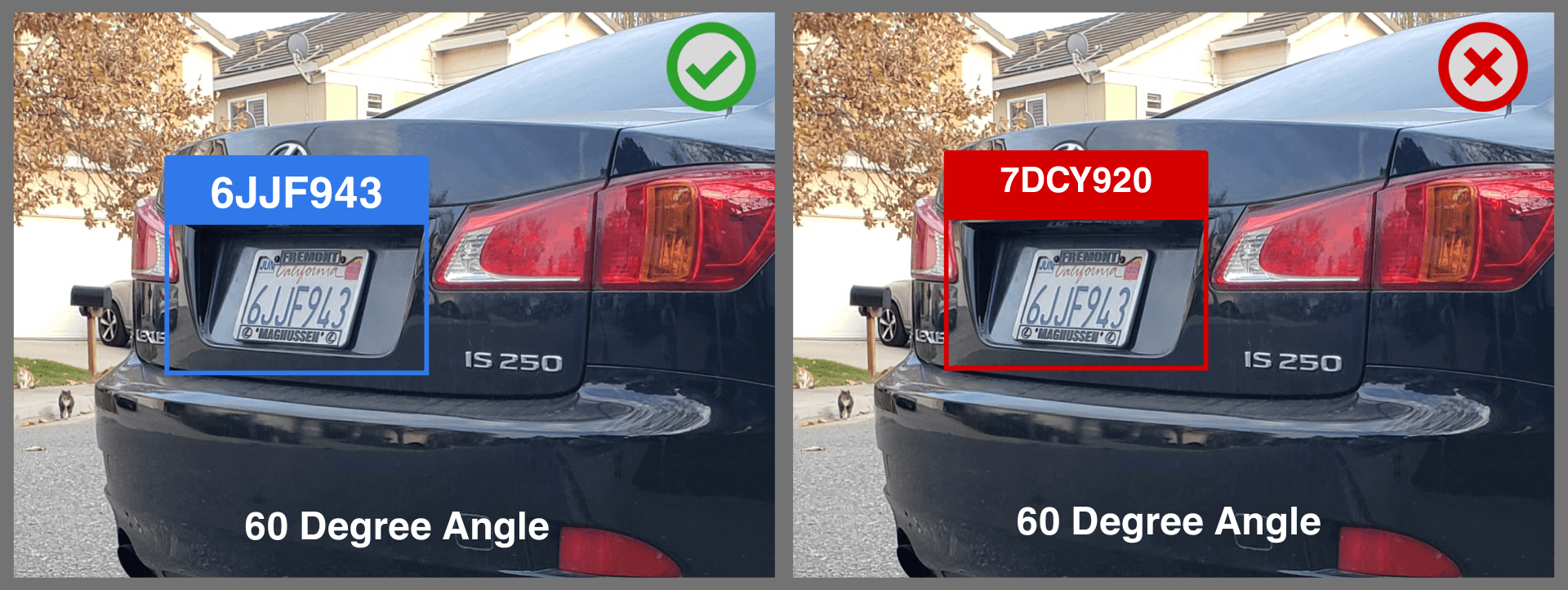
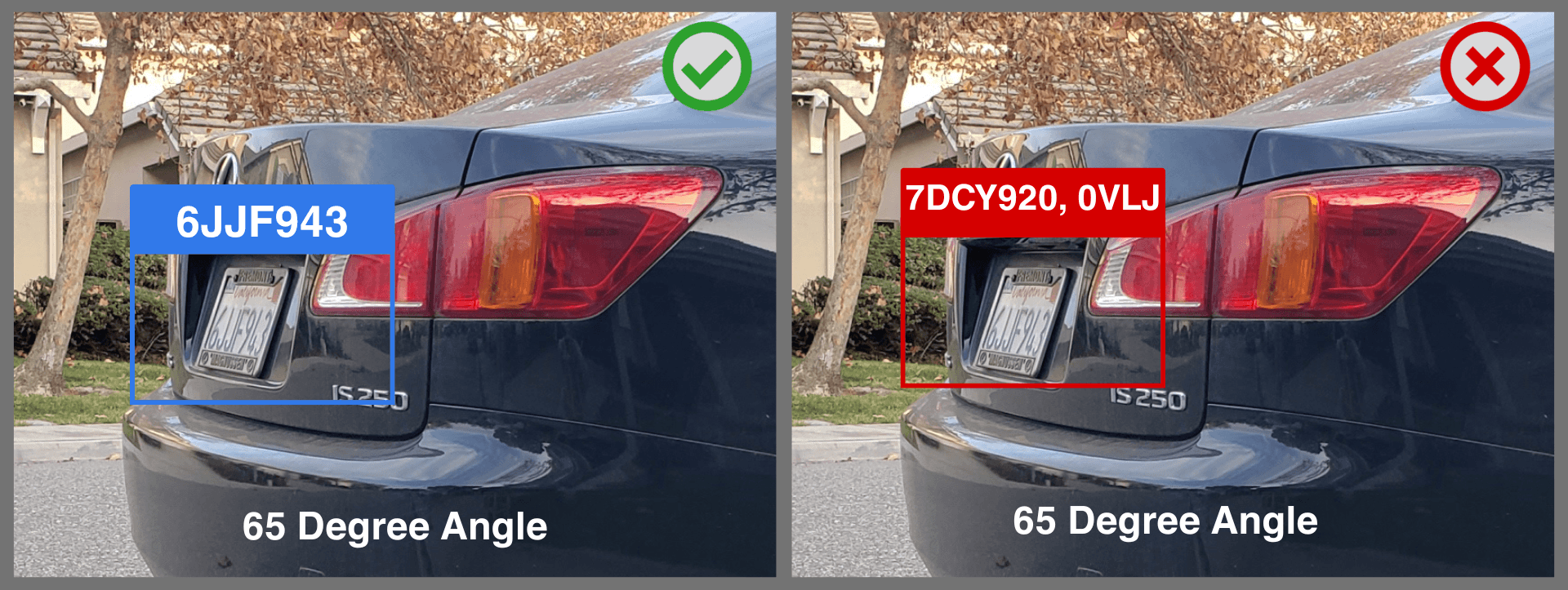
Because Plate Recognizer does not require perfect geometry, it can reliably read plates at extreme camera angles well beyond 30 degrees and process low-resolution images where the plate width is far below 100 pixels. This advanced pattern recognition ensures consistent accuracy in dark, high-glare, or unpredictable real-world lighting environments where legacy systems fail.
Because of DTK’s algorithmic constraints, deploying it requires near-perfect camera placement. Installers must run complex geometric and trigonometric calculations just to determine the exact camera height, pitch, and distance from the vehicle. If a camera vibrates from heavy wind or experiences direct, blinding sunlight, the system’s reliability plummets.
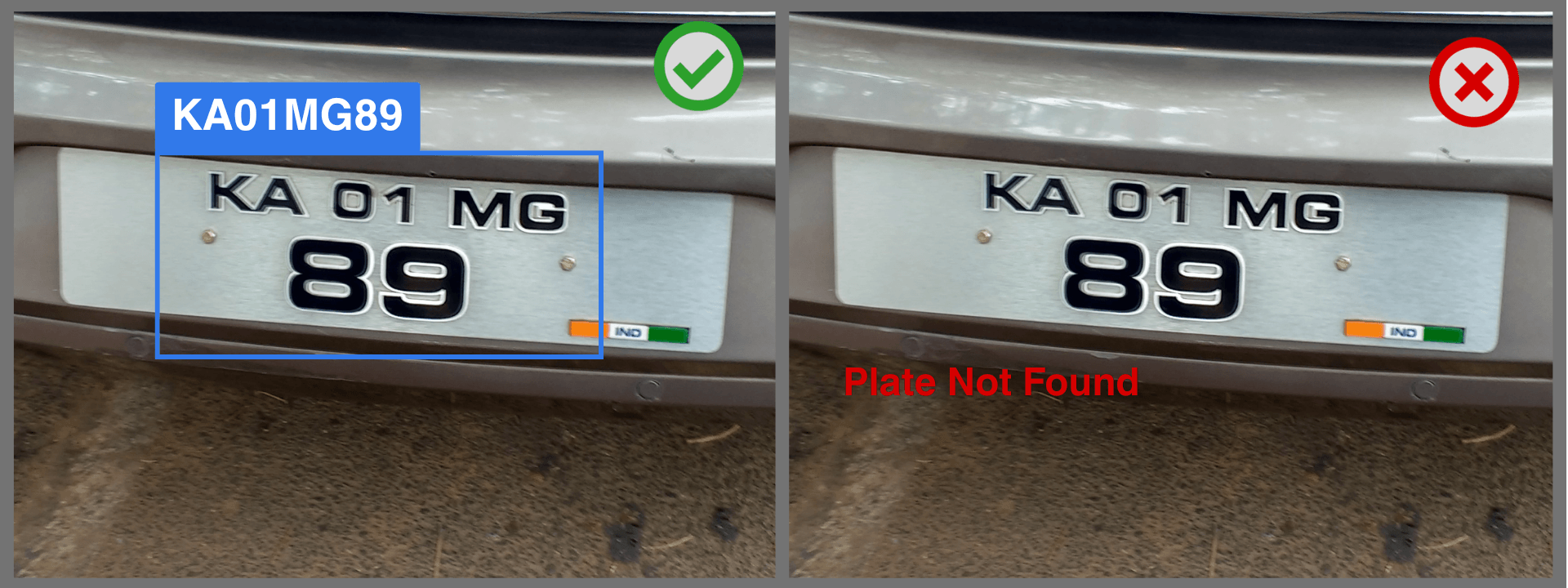
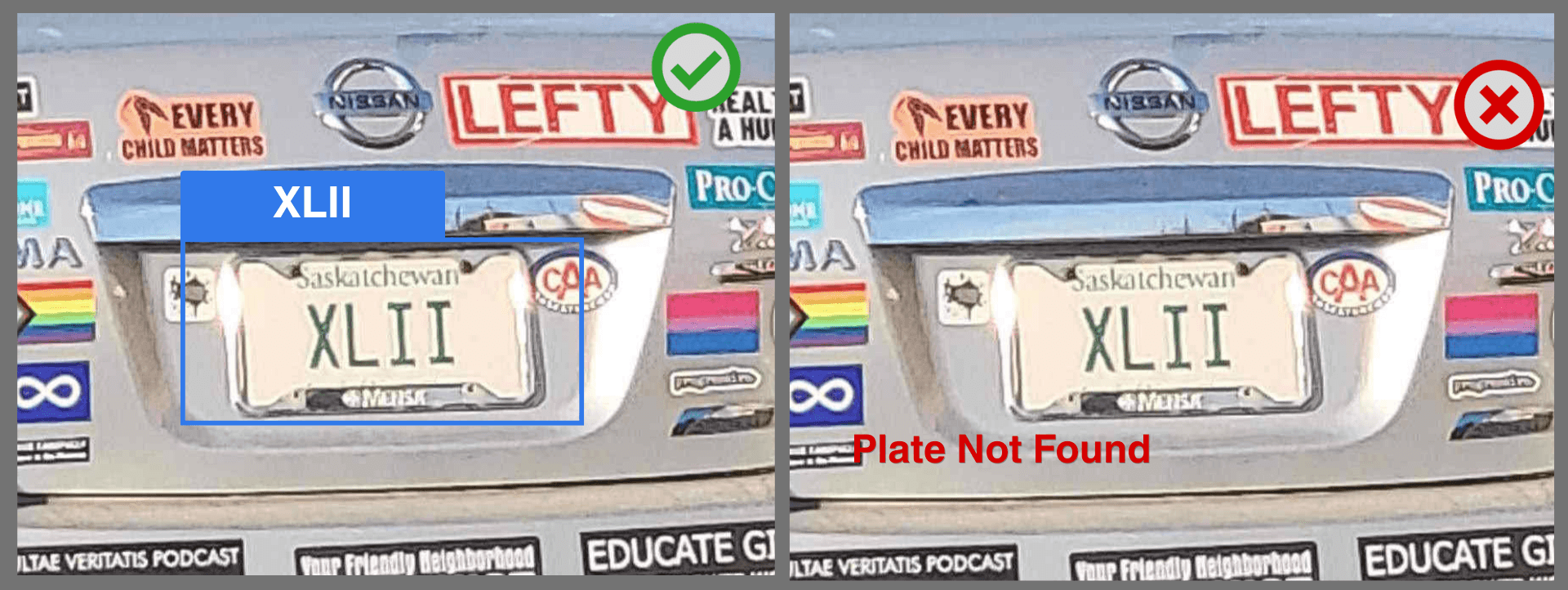
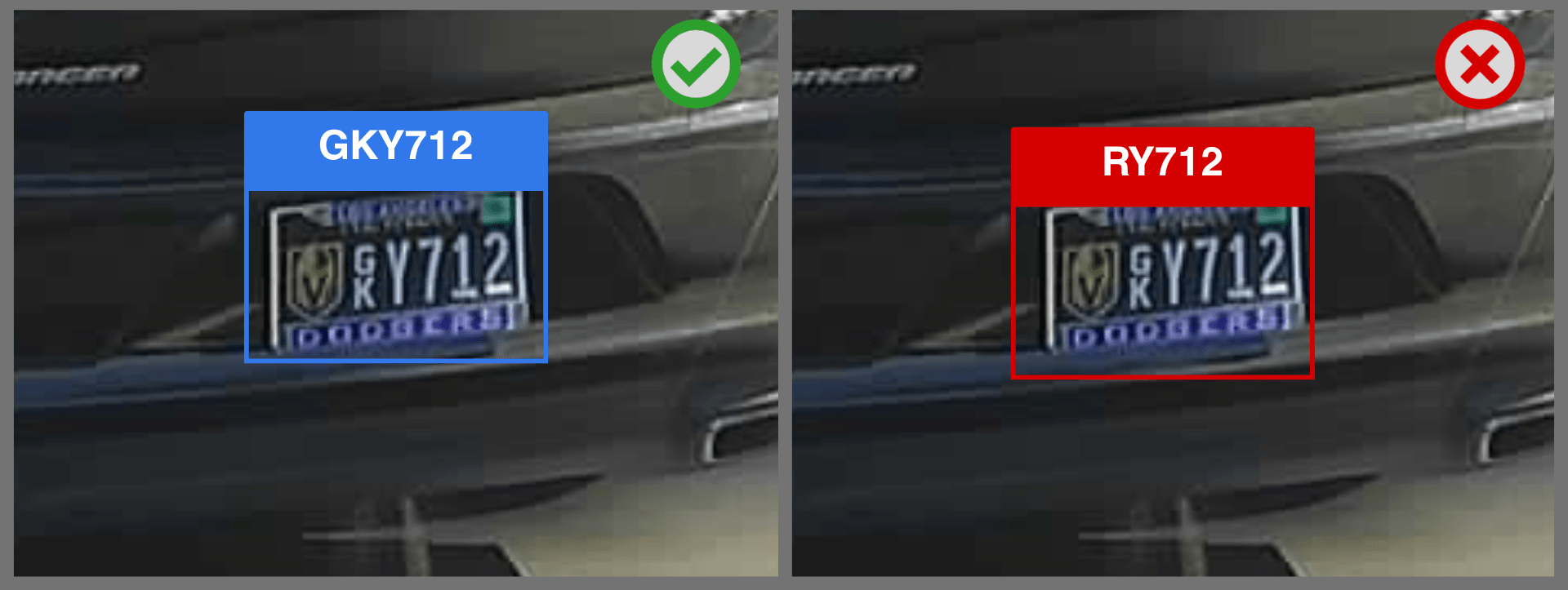
Plate Recognizer removes this hardware dependency by shifting the analytical burden to deep-learning neural networks. Like a human eye, these AI models assess the entire visual context of a frame to automatically correct for perspective, distortion, and poor lighting.
Consequently, Plate Recognizer delivers highly accurate, dependable reads even when plates are:
- Captured at severe angles – Decodes vertical or lateral angles up to 70 degrees.
- Obscured by debris – Identifies plates heavily coated in road dust, mud, or rust.
- Distorted by movement – Resolves issues caused by motion blur or poor camera focus.
- Challenged by lighting – Bypasses pitch-black conditions, heavy shadows, or blinding headlight glare.
Resolving bad visual inputs at the software level eliminates the need for costly camera readjustments, specialized mounting hardware, and restrictive installation guidelines.
Plate Recognizer vs DTK MMCR and Vehicle Intelligence
An ALPR engine’s ability to analyze a full visual scene, rather than focusing strictly on character pixels, directly impacts the depth of vehicle data it can extract. Modern security and parking operations require these broader metrics to combat “plate cloning”—a tactic where bad actors replicate authorized license plates to bypass security gates. Preventing these breaches requires verifying that the physical vehicle matches its registered profile.
Built on deep learning AI, Plate Recognizer delivers complete and exceptionally accurate Vehicle Make, Model, Color, and Body Type (MMCR) directly inside its baseline engine’s core JSON payload without extra processing or separate plugins. This high-precision, unified dataset allows security platforms to instantly flag anomalies in real time—such as alerting team members when an authorized plate is detected on a black truck instead of its registered silver sedan.
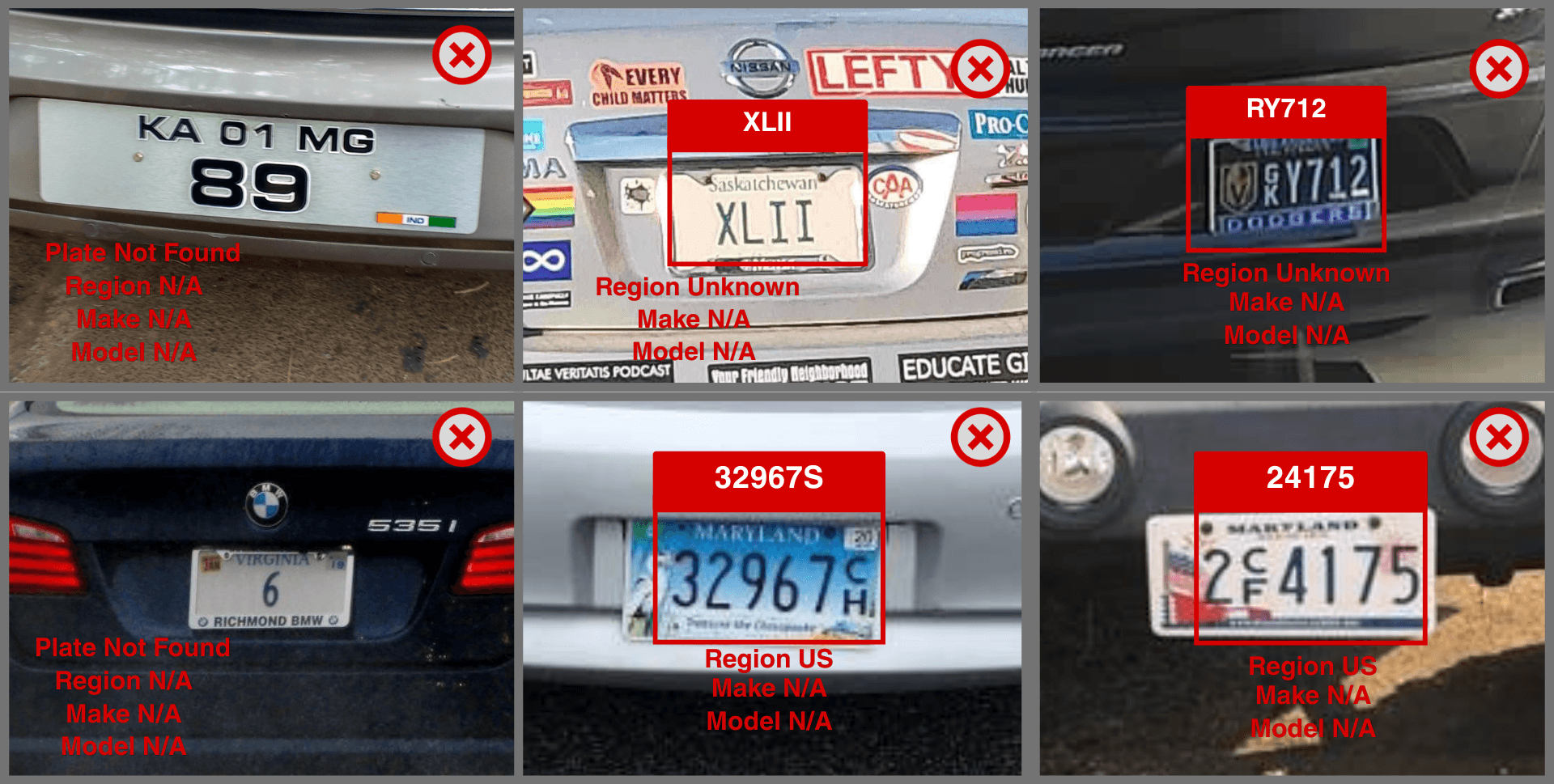
DTK Misreads license plates and misses key regional details on custom or low-contrast formats, producing undetected plates and unknown region errors across difficult visual frames. Source: Plate Recognizer
While DTK Software has updated its core LPR SDK to natively detect vehicle make, model, and view orientation (front or rear classification), its data capture architecture differs fundamentally from Plate Recognizer:
- Cropped Region Limitations – To maintain real-time speeds on local hardware, DTK’s core LPR engine restricts its search area to the immediate pixel zone surrounding the license plate. If a camera setup utilizes a tight zoom or the frame cuts off the vehicle body, the system struggles to identify the vehicle’s make and model.
- Separated Advanced Modules – DTK treats full vehicle color and comprehensive vehicle body type tracking as entirely separate features. If your application requires high-detail profiling where a license plate is hidden or missing, you must purchase, license, and integrate their standalone DTK VMMR SDK alongside the core LPR engine.
- Fragmented Data Payloads – Because color and deeper vehicle analytics are siloed in the standalone VMMR SDK, developers are forced to combine two completely separate data outputs on their own backend, creating a much more complex workflow compared to Plate Recognizer’s single, unified payload.
Plate Recognizer processes the full visual context out of the box, ensuring highly reliable vehicle profiling and color detection natively without requiring complex multi-product configurations or stacked licenses.
Plate Recognizer vs DTK for Parking Management
For parking lot operators, a parking management system must maximize revenue, eliminate gate lag, and minimize long-term maintenance. While both Plate Recognizer and DTK Software automate vehicle access, their underlying architectures create vastly different operational realities.
The table below breaks down how their technical differences impact the key performance metrics that matter most to parking facility decision-makers:
|
Operational Metric |
Operational Impact |
||
|---|---|---|---|
|
Deployment Model |
Cloud-Hosted or Local On-Premise |
Strictly Local On-Premise |
Plate Recognizer removes onsite server hardware dependencies. |
|
Gate Lag |
Under 50ms processing speed |
Hardware-dependent speed |
Plate Recognizer prevents vehicle queuing at entry points. |
|
Initial Hardware Costs |
Uses existing standard IP cameras |
Requires high-end, specialized LPR cameras |
DTK requires expensive, precise physical hardware alignment. |
|
Dashboard & Reporting |
Built-in, centralized Web GUI |
Requires custom software development |
Plate Recognizer provides instant visual management. |
|
System Integrations |
Native Webhooks and Rest APIs |
Low-level C++/C# SDK libraries |
Plate Recognizer connects instantly to payment apps. |
|
Parking Management Software |
Direct native integration with ParkPow |
Requires third-party software or custom build |
Plate Recognizer offers a fully unified ecosystem for vehicle logging, occupancy tracking, and enforcement. |
Key Operational Differences of Plate Recognizer and DTK for Parking Operators
1. Eliminating Entry Gate Lag
Vehicle throughput directly impacts customer satisfaction and prevents traffic backups onto public roads.
- Plate Recognizer – Processes images in under 50 milliseconds. This rapid AI inference triggers automated gates instantly, ensuring continuous, fluid traffic flow during peak morning or evening rushes.
- DTK Software – Processing speed depends entirely on the local computer hardware running the software. If the local server is running multiple camera streams, processing lag can cause noticeable gate delays, leading to frustrating vehicle queues.
2. Upfront Hardware and Infrastructure Costs
Minimizing capital expenditure (CAPEX) allows parking operators to see a faster return on investment.
- Plate Recognizer – Functions seamlessly with standard, budget-friendly IP cameras already installed in the facility. Because the software handles visual distortions, operators save thousands on hardware.
- DTK Software – Requires precise, high-contrast, perfectly positioned cameras to hit its strict pixel-width and angle requirements. Operators must budget for expensive specialized cameras and precise mounting hardware.
3. Maintenance, Reporting, and Ease of Use
Non-technical parking operators need to view lot data without hiring a full-time software engineering team.
- Plate Recognizer – Includes a user-friendly, centralized dashboard out of the box. Operators can immediately view live traffic data, search plate histories, manage access lists, and audit occupancy rates.
- DTK Software – Operates purely as a software development kit (SDK). It lacks a ready-to-use operator dashboard, meaning facility managers must pay a software developer to build a custom reporting interface from scratch.
4. Webhooks and Third-Party Integrations
Modern parking lots rely on an ecosystem of digital payment apps, enforcement tools, and reservation systems.
- Plate Recognizer – Offers native Webhooks and standard REST APIs. The system automatically sends real-time plate data to parking payment platforms (like ParkMobile or SpotHero) the instant a car triggers the camera.
- DTK Software – Delivers data via low-level code integrations (C++, C#, Delphi). Connecting DTK to a modern web-based parking payment system or mobile app requires extensive, costly custom backend engineering.
Plate Recognizer vs DTK Supported Hardware Comparison
An ALPR engine’s hardware flexibility directly dictates both upfront infrastructure costs and the overall complexity of a parking deployment. Comparing the physical requirements reveals a significant architectural gap in how they consume local hardware resources.
|
Hardware Feature |
||
|---|---|---|
|
Windows Support |
Yes (via Cloud API or Docker Desktop) |
Yes (Native SDK libraries) |
|
Linux Support |
Yes (Native Linux Docker container) |
Yes (Native Linux libraries) |
|
NVIDIA Jetson |
Yes (Dedicated ARM64 Jetson Docker builds) |
No native out-of-the-box package |
|
Raspberry Pi |
Yes (Dedicated Raspberry Pi Docker Hub Image) |
Requires manual custom compilation |
|
GPU Dependency |
Optional (Runs efficiently on standard CPUs) |
Heavy reliance on dedicated GPUs for multi-cam setups |
Choosing the Right Infrastructure for Your Deployment
As the hardware comparison highlights, the decision between these two platforms ultimately comes down to your available physical space, hardware budget, and deployment timelines. DTK Software provides high-performance local binaries but demands rigid server setups, specific desktop operating systems, and heavy hardware acceleration to scale up.
Conversely, Plate Recognizer delivers an agile, resource-efficient AI engine that runs smoothly on anything from an enterprise cloud server to a low-cost edge device out of the box, letting you maximize your existing infrastructure.
Plate Recognizer vs DTK Integration and Developer Experience
Acquiring this detailed vehicle data is only valuable if developers can easily ingest and process the payloads within their existing systems. Consequently, the ultimate speed and success of any ALPR project depend on how easily the recognition software integrates with modern IT infrastructure.
DTK operates as a traditional, compiled desktop SDK. This legacy model delivers raw binary libraries that developers must manually link into local applications. Integrating these components requires specialized desktop programming experience. Software engineers must write custom low-level code to handle raw IP camera video streams, manage frame-buffer memory, set up local database storage, and build a user interface from scratch. This intensive development cycle frequently stretches project timelines from days into months.
Plate Recognizer simplifies this entire process by replacing desktop compilation with modern web architecture. Developers can choose between two flexible deployment methods depending on their operational needs:
- Standard REST API – Sending an HTTP image payload to the secure Cloud API returns structured JSON data in milliseconds. This universal approach works with any programming language and requires zero local library installation.
- On-Premise Docker Containers – Local deployments utilize a pre-packaged Docker container. This environment isolates the entire ALPR engine, its dependencies, and runtime configurations, allowing teams to launch the software on local hardware with a single command.
Furthermore, Plate Recognizer features native, out-of-the-box integrations with third-party platforms like Home Assistant, Node-RED, and popular Video Management Systems (VMS). These pre-built connections allow teams to link camera streams directly to automation workflows in minutes, completely bypassing the traditional coding lifecycle.
Plate Recognizer vs DTK Developer Resources and Support
Evaluating the developer ecosystems, documentation quality, and support infrastructure between Plate Recognizer and DTK Software reveals a clear structural divide: modern, cloud- and container-native web architectures versus traditional, high-performance localized desktop SDK engineering. Both platforms cater to distinct software engineering workflows, deployment targets, and technical skill sets.
Documentation Quality and API Interactivity
- Plate Recognizer – Delivers a modern, web-native developer experience centered around an interactive API reference generated directly from its codebase. Engineers can test live requests, examine strict JSON schemas, and evaluate real-time response structures directly in their browser. Documentation includes copy-and-paste code samples across popular web and scripting environments, including Shell, Python, Ruby, and JavaScript.
- DTK Software – Uses traditional software documentation structures (generated via automated tools like Natural Docs), typically packaged as offline .chm compiled help files or local .html directories within the installer. Code samples concentrate heavily on compiled, desktop-oriented development languages like C++, C#, VB.NET, Delphi, Java, and Python.
Cross-Platform Hardware and Deployment Flexibility
The underlying engine architectures dictate how teams package, scale, and deploy their applications across edge and enterprise environments:
|
Developer & Deployment Metric |
Plate Recognizer |
DTK Software |
|---|---|---|
|
Primary Deployment Model |
Cloud API or local Docker containers |
Local native OS dynamic libraries (.dll / .so) |
|
Windows & Linux Support |
Native Docker implementation across both OS environments |
Native pre-compiled binaries for 64-bit Windows and Linux |
|
Raspberry Pi Ecosystem |
Dedicated, pre-built Raspberry Pi Docker Hub images |
No native package (requires manual target compilation) |
|
NVIDIA Jetson Optimization |
Pre-packaged ARM64 Jetson Docker builds out of the box |
No native, out-of-the-box specialized Jetson package |
Integration Complexity: REST API vs. Low-Level Video Loops
- Plate Recognizer – Operates as an independent microservice. Developers simply push an image payload via a standard HTTP multi-part request to receive a clean JSON response containing character strings, spatial bounding boxes, and full vehicle MMCR features. This decoupled approach simplifies third-party integrations, supported by community-built plugins for platforms like Home Assistant and Node-RED.
- DTK Software – Requires low-level memory and stream management. Developers must write custom code to pull raw frames from RTSP streams via the DTKVID library and pass uncompressed memory pointers into the detection thread. Achieving high-throughput GPU acceleration on local hardware requires manually installing, configuring, and caching NVIDIA CUDA toolkits and TensorRT runtimes.
Onboarding Speed and Technical Support Friction
- Plate Recognizer – Features friction-free onboarding with instant website sign-ups that yield an immediate API token and 2,500 free monthly lookups—no sales calls or approval delays required. Ongoing support is delivered through a global, responsive technical helpdesk, email channels, and public engineering guides covering camera installation and optimization. Whether assisting developers or non-technical users, Plate Recognizer is objectively superior in its guides and documentation, equipping teams with everything required to bring projects to reality quickly and easily. Additionally, Plate Recognizer provides global, multilingual technical support with short response times, ready to support users throughout their entire project lifecycle and help bring their ideas to life.
- DTK Software – Provides a downloadable, time-limited, or watermark-restricted evaluation trial. Testing requires downloading a 50MB+ installation bundle, configuring a local desktop development environment, and manually linking native library paths. Support operates traditionally via email ticketing and software maintenance agreements.
Developer Support Verdict
Selecting the right developer framework comes down to your underlying software architecture and deployment requirements:
Choose Plate Recognizer if your application stack uses modern web languages, microservices, cloud functions, Python/Node.js backends, or edge deployments relying on lightweight Docker containers (such as Raspberry Pi or NVIDIA Jetson).
Choose DTK Software if you are building standalone, native desktop software (e.g., C# WPF or C++ Win32 apps) operating inside air-gapped, closed networks without internet or container footprints, and your team has dedicated experience managing low-level hardware drivers and GPU thread allocation.
Plate Recognizer vs DTK International Plate Coverage
Establishing a flexible, modern integration pipeline solves development friction, but an ALPR engine must ultimately succeed at decoding the massive variety of license plates found across global roadways. Global designs vary dramatically in font weight, background colors, character stacking, and regional emblems—factors that frequently cause legacy pattern-matching software to fail.
Comparing the international coverage models of Plate Recognizer and DTK Software reveals fundamental differences in geographic footprint, state-level parsing, and engine adaptability:
Geographic Scale & Regional Footprint
- Plate Recognizer – Delivers extensive global scale out of the box, officially decoding plates across 90+ countries spanning 6 continents. Its granular coverage includes deep regional support across North & Central America (USA, Canada, Mexico, and exhaustive Caribbean coverage such as Jamaica, Bahamas, and Puerto Rico), South America (Brazil, Argentina, Chile, Colombia, Bolivia, Ecuador), as well as broad footprints across Europe, Asia, Africa, and Oceania.
- DTK Software – Operates on a smaller, targeted list of international countries. DTK’s core SDK documentation focuses heavily on primary markets, offering stable parsers for the United States and Canada, alongside select European nations (e.g., Albania, Andorra, Austria, Belgium, Bulgaria) and key Latin American markets like Argentina and Brazil. While Plate Recognizer generally maintains superior coverage at both the country and regional levels, comparing the two reveals that DTK’s country list currently includes three countries that are not listed by Plate Recognizer—a distinction that may be intentional or an oversight, but remains relevant for specific regional deployments.
State & Province Parsing
- Plate Recognizer – Automatically identifies state and province metadata (such as returning US-CA for California) directly within its standard visual payload alongside character string, vehicle MMCR, and confidence scores.
- DTK Software – Features explicit configuration options within its North American parser specifically designed to extract and log state-level or province-level origin metadata alongside raw plate character outputs.
Machine Learning Adaptability vs. Static Rules
- Plate Recognizer – Built entirely on a machine learning model architecture trained on an ever-expanding global visual dataset. This AI engine adaptively decodes non-standard plate layouts, vanity plates, and newly issued state/regional designs without requiring users to wait for compiled software updates or purchase specialized regional add-ons.
- DTK Software – Relies on compiled, static rulesets tailored to specific regional formats. When encountering an unsupported plate or a non-standard layout outside its rigid template library, the engine requires updated binary patches or manual system reconfigurations.
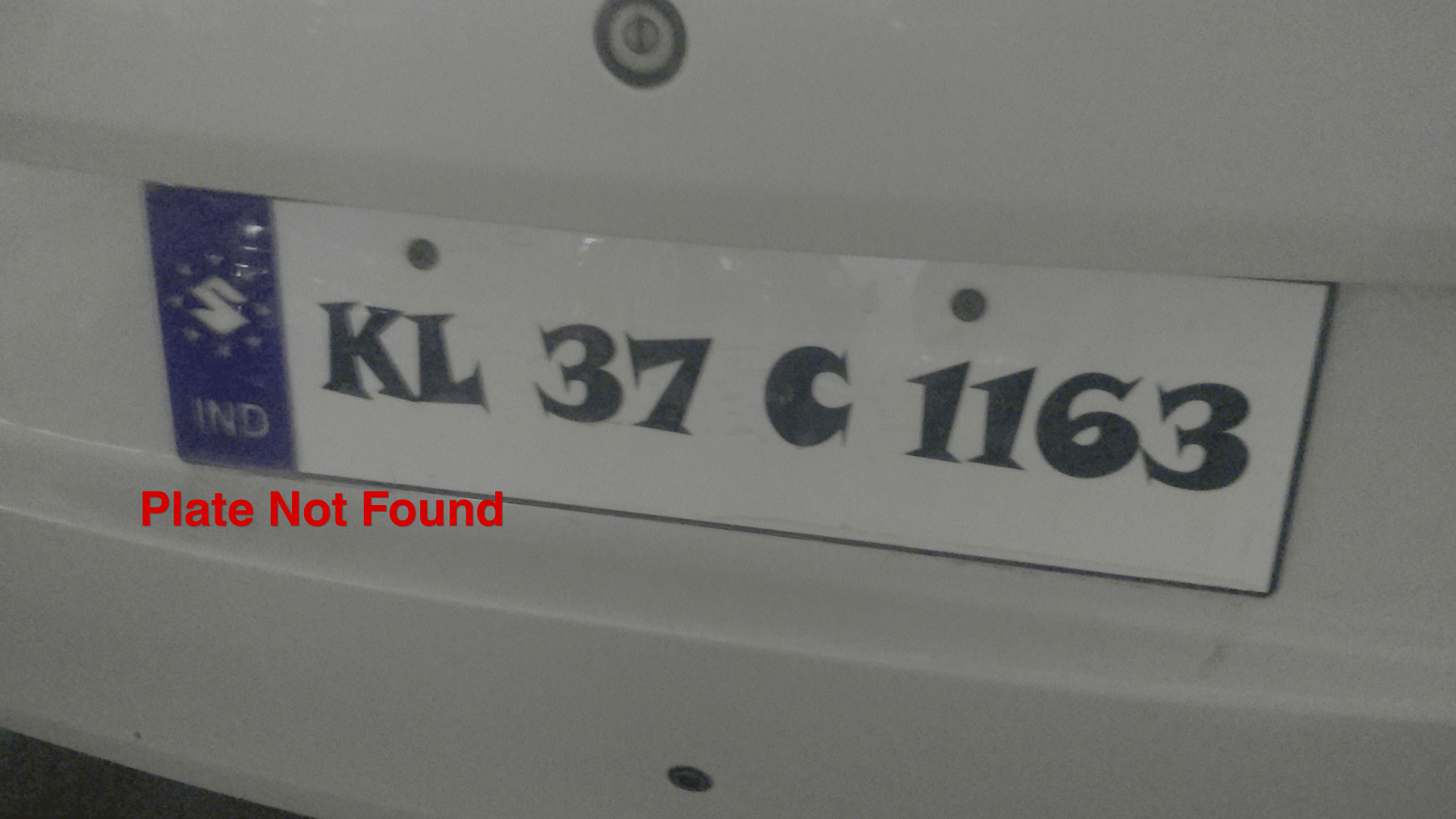
DTK Software wasn’t able to read a license plate from India. Source: Plate Recognizer
Coverage Verdict
Choosing between the two coverage footprints ultimately depends on operational scale, geographic reach, and system adaptability requirements. Plate Recognizer serves as the optimal choice for organizations requiring an expansive international footprint, operating across diverse markets in Central/South America or the Caribbean, or deploying in environments where continuous machine learning automatically adapts to new plate layouts. Conversely, DTK Software remains a viable alternative for operations strictly confined to the United States, Canada, or select European and LATAM regions that rely on local desktop binary installations with specialized localized parsers.
Plate Recognizer vs DTK International Plate Coverage
Establishing a flexible, modern integration pipeline solves the development friction, but the software must still be able to read the massive variety of license plates found in the field. Globally, plates vary dramatically in shape, font weight, background color, and layout. Stacked letters, multi-line designs, and regional emblems present massive visual obstacles for traditional pattern-matching algorithms.
Because legacy engines like DTK rely on rigid mathematical templates, they struggle to process non-standard plates. A vehicle traveling from a neighboring state or country with a different plate format can easily cause a system misread. Resolving these errors often forces developers to purchase, install, and configure dedicated regional software modules, adding unnecessary complexity and cost to the deployment.
Plate Recognizer solves this variation challenge through continuous machine learning. The AI engine is trained on a massive, ever-expanding global dataset containing real-world plate layouts from over 90 countries. This extensive training allows the engine to recognize non-standard layouts, complex stacked text, and unique country formats automatically—without requiring specialized regional packages or manual configuration updates.
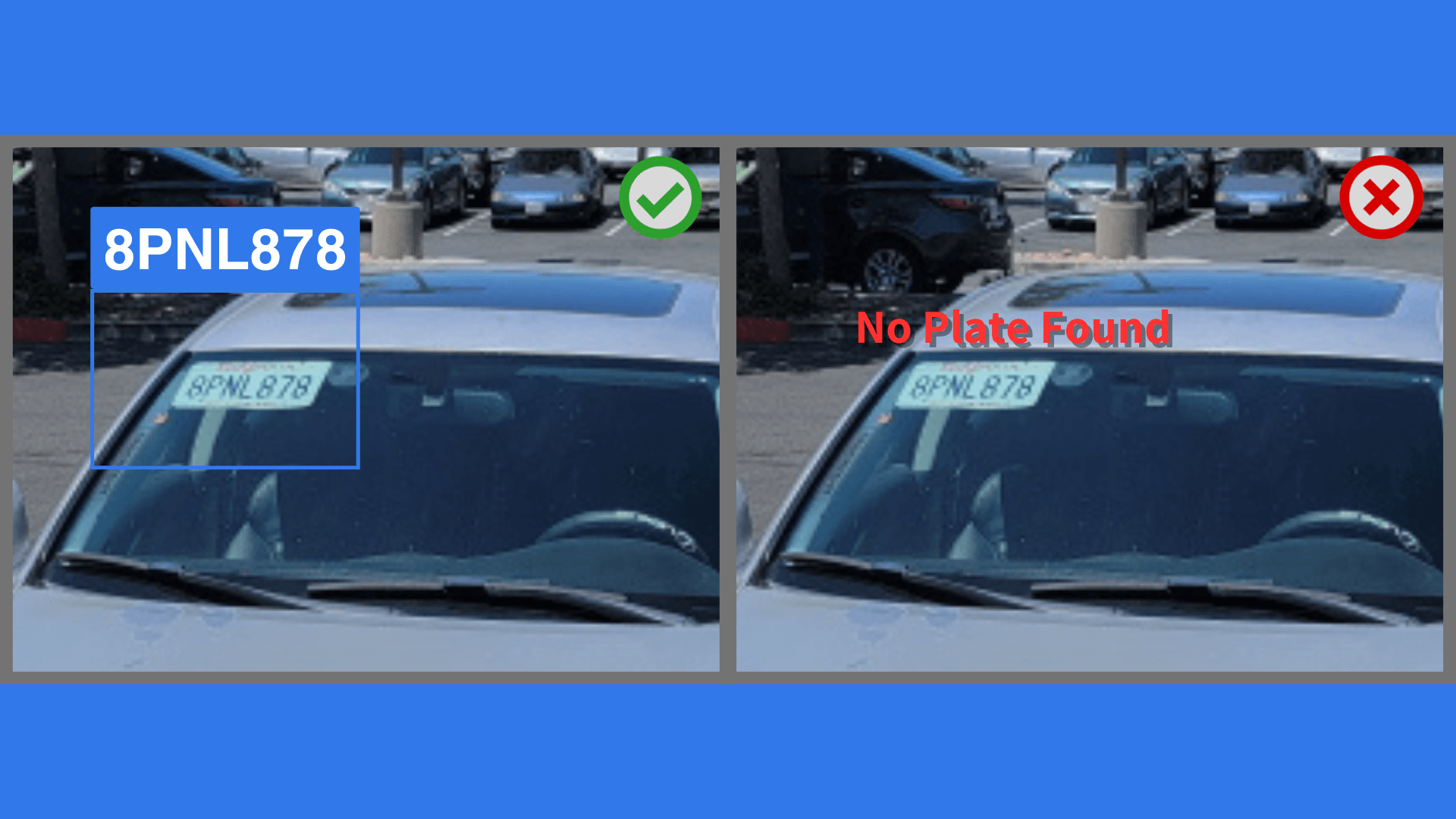
DTK software not recognizing a plate on a windshield. Source: Plate Recognizer