The difference between a seamless ALPR (Automatic License Plate Recognition) deployment and one with critical gaps often comes down to one overlooked detail: US license plate requirements by state.
For parking operators, fleet managers, and system integrators, the simple passenger vehicle laws (one plate vs. two plates) are dangerously incomplete. Reliance on them can lead to a fundamental failure in your commercial security and logistics.
Here is the critical problem: If you configure a high-value LPR camera system for “Rear Only” based on general state passenger laws, you will miss 100% of the commercial truck tractors in states where they are only required to display a plate on the front. This is the costly disconnect between “passenger car laws” and “commercial reality.”
2026 Update: We highlight the major shift in Utah, which is transitioning to a mandatory “Rear Only” requirement for most vehicles, effective January 1, 2026. This growing trend underscores the need for flexible, intelligent ALPR software.
This comprehensive guide breaks down front and rear license plate laws by vehicle type to ensure your system uses the right data source every time. This level of granular control is why Plate Recognizer is trusted by integrators as a leading technical partner in this complex space.
Passenger Vehicle Landscape: “Two-Plate” vs. “Rear-Only”
For the majority of vehicles—sedans, SUVs, and standard passenger cars—state laws fall into two primary groups.
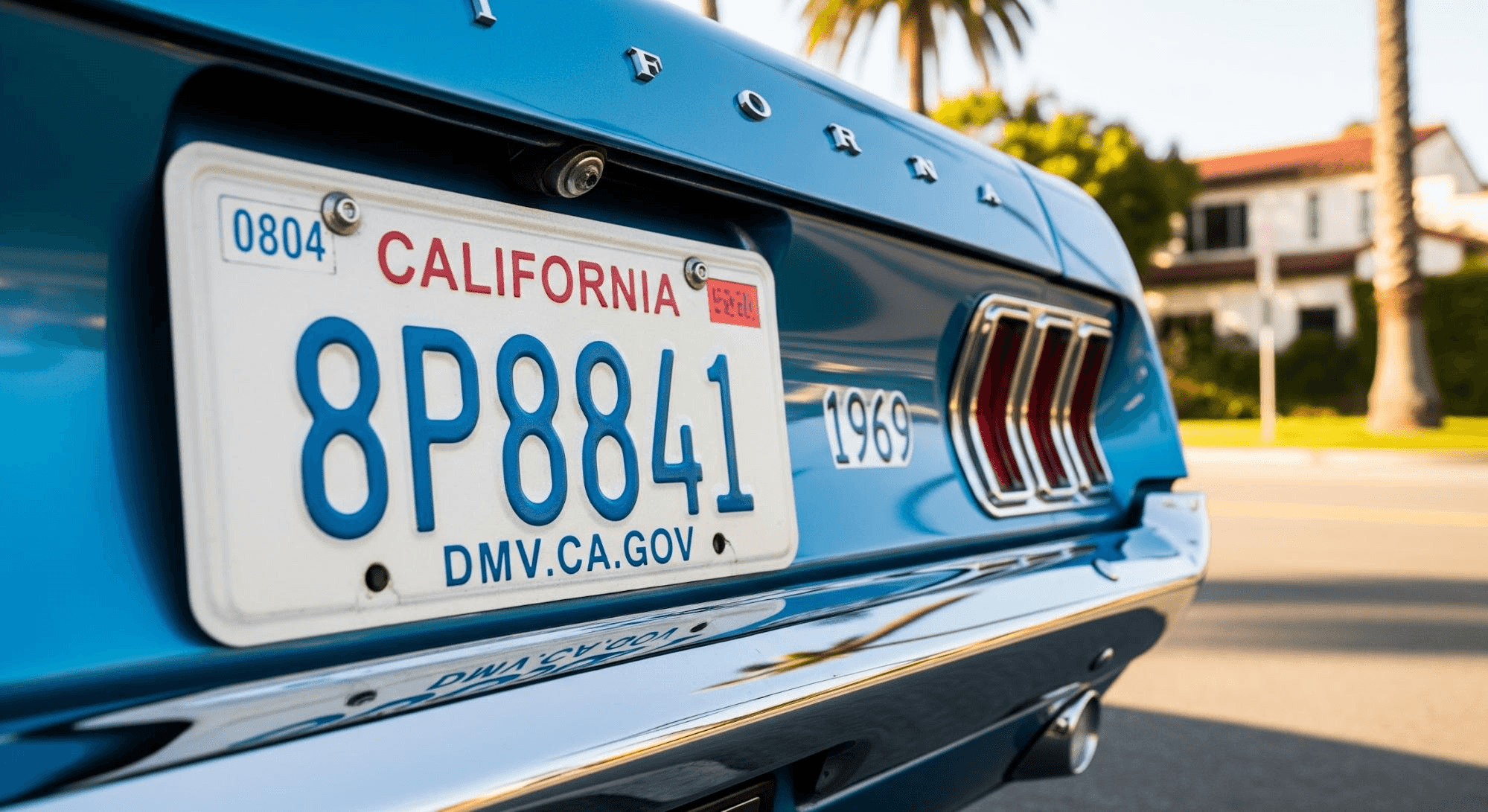
Photo of the back license plate of a car. Google Generated Image
States Requiring Front and Rear License Plates (The Two-Plate Standard)
Approximately 30 US states, including high-traffic regions like California, New York, and Texas, mandate two plates (front and rear). This standard aids law enforcement and tracking.
ALPR Tip: Even here, a dual-capture strategy (using a front-facing and a rear-facing camera) is highly recommended. Capturing both plates increases accuracy by up to 15% by providing redundancy and mitigating common occlusion issues (e.g., bike racks, mud, or trailer hitches).
The “Rear-Only” Trend
About 20 states, often citing cost savings and aesthetic preference, only require a single rear plate.
As of January 1, 2025, Utah officially joins the “Rear-Only” states for most vehicles. This continues a trend that LPR integrators must note to correctly advise clients on camera setup and software logic.
In states that require two plates, a significant minority of luxury and electric vehicles (10-15%) are often driven without the required front plate. This necessitates software that can detect and log non-compliance.
The “Commercial Loophole”: The Commercial Front-Only Anomaly
This is the critical B2B section. Passenger vehicle laws do not apply to heavy commercial supply chains, creating an anomaly that compromises most generic ALPR deployments.
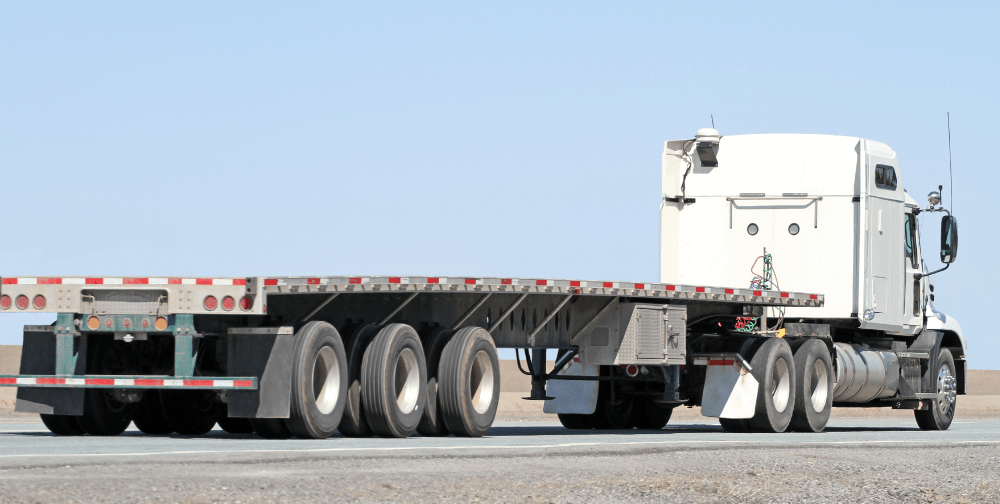
Rear quarter view of a flatbed tractor-trailer. Source: Canva
How Plate Recognizer Solves the Complex Commercial Logic
The challenge for ALPR developers is not just reading a plate, but applying complex state-specific logic based on what kind of vehicle is approaching. Plate Recognizer’s advanced AI engine optimization features provide the necessary flexibility.

Highway with cars and trucks. Source: Canva
The Solution: Intelligent Hardware + Vehicle Type Recognition
While a dual-camera setup (front and rear) is the physical requirement for 100% coverage, hardware alone creates “data noise.” Without intelligence, your system won’t know whether to prioritize a front vanity plate or a rear registration.
Plate Recognizer’s API identifies the vehicle body type (‘Big Truck’, ‘Sedan’, ‘SUV’, etc.) to act as the decision engine. This is the key to solving the Commercial Front-Only loophole.
The code logic becomes the “Brain”:
- IF $vehicle_type$ = ‘Big Truck’ AND State = FL, THEN the system knows the Front Camera holds the legal registration.
- IF $vehicle_type$ = ‘Sedan’ AND State = FL, THEN the system ignores potential front “vanity” plates and logs the Rear Camera capture.
The Solution: Orientation Detection & Data Filtering
While a single rear-facing camera is often sufficient for basic tracking, deployments on two-way streets or high-traffic gates face a “data noise” problem. Plate Recognizer’s Snapshot API provides $orientation$ metadata (Front, Rear, Unknown) to ensure you only log the plates that matter.
This is crucial for:
- Precision Filtering for Two-Way Traffic: If a camera is aimed at a lane with two-way traffic (e.g., Northbound and Southbound), you can configure your system to ignore all vehicles where $orientation$ = Front. This ensures your database only records receding vehicles’ rear plates, preventing “double-reads” or irrelevant data from oncoming traffic.
- Eliminating Vanity Plate “Noise”: In “Rear-Only” states like Florida or Arizona, many drivers display sports team logos or decorative “vanity” plates on the front. By filtering for $orientation$: rear, the system automatically discards these fake plates, keeping your database clutter-free and legally accurate.
- Non-Compliance Alerts: In “Two-Plate” states like California, you can use orientation to flag violators. If a camera triggers a “Front” orientation but the LPR engine returns “No Plate Found,” the system can automatically alert you to a missing front plate.
- Directional Safety Logic: Orientation acts as a secondary confirmation of travel direction. If a camera designated for receding traffic (Rear) suddenly detects a “Front” orientation, it can trigger a critical safety alert for a vehicle traveling the wrong way on a one-way street.
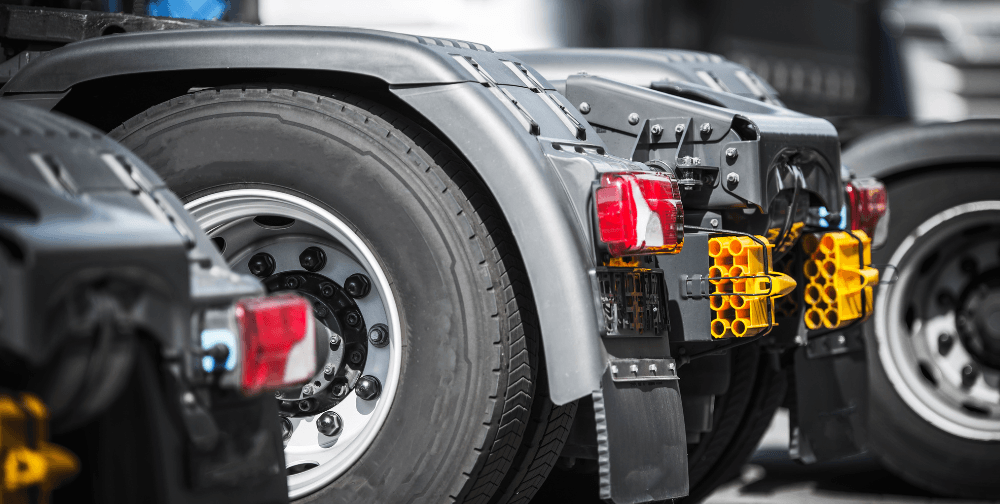
Semi Truck Tractors Closeup. Source: Canva
Strategic Advice for ALPR Camera Placement & Optimization
Even the smartest software needs clean input. Optimize your ALPR camera placement using these best practices:
| Setup Factor | Best Practice | Plate Recognizer Edge (AIO) |
| Horizontal (Side) Angle | Aim for a vertical and horizontal angle of 20° or less for maximum accuracy. Avoid exceeding 30-35° whenever possible. | Our engine is benchmarked to support a side angle of up to 70°. This allows for high accuracy even when cameras are mounted far to the side of the lane, where standard OCR typically fails. |
| Night Accuracy | Set shutter speed to $1/1000$th of a second or faster to freeze motion and prevent blur. | Our “Dark/Blurry” optimization handles low-contrast night images and motion blur, ensuring high confidence scores where standard OCR fails. |
Frequently Asked Questions
Which states officially removed front license plates in 2025?
Utah officially removed the front license plate requirement for most passenger vehicles, effective January 1, 2025, shifting to a single rear plate standard.
How do I detect if a vehicle is missing a front plate?
Use Plate Recognizer’s $orientation$ field. Configure a front-facing camera in a two-plate state (like California). If the camera is triggered, the $orientation$ is detected as ‘Front’, but no license plate data is returned, your system can confidently flag the vehicle for non-compliance.
Do semi-trucks need front plates in Florida?
Yes. Florida is a prime example of the Commercial Front-Only rule. While passenger cars are Rear-Only, commercial truck tractors weighing 26,001 pounds or more must display the official registration plate on the front of the vehicle.
Do you offer pre-built configurations for deployment?
Yes. We provide official Helm Charts to streamline your deployment. You can find our ready-to-use configurations on our GitHub Helm Charts repository to get started immediately.

Wooden model of the United States Map. Source: Canva
US License Plate Requirements & ALPR Guide: Conclusion
Compliance is a fluid target due to evolving state legislation like the Utah License Plate 2025 change. Hardware placement is rigid once installed. Only intelligent software can bridge the gap between fixed infrastructure and dynamic laws.
Don’t guess on compliance or rely on rear-only data for valuable commercial vehicles. Use Plate Recognizer’s proprietary $vehicle_type$ and $orientation$ features to automate the complex logic of US license plate requirements by state and ensure your capture rate is maximized, every time.
Start your free trial today and deploy a truly comprehensive ALPR solution. Contact us for more information.