High-volume car washing is a business of margins and momentum. Success depends on moving vehicles safely through the tunnel at maximum capacity. Yet, operators constantly face a tension between speed and safety. A single oversight at the tunnel entrance—a missed open truck bed or an overlooked bike rack—can halt operations instantly. The resulting damage to equipment and customer vehicles creates a financial bleed that often goes unnoticed until the end-of-year audit.
For years, the industry relied on License Plate Recognition (LPR) to identify customers. Knowing a driver’s membership status is vital for revenue, but it offers zero protection against physical hazards. To protect the tunnel infrastructure, the focus must shift from identifying the person to analyzing the vehicle.
Vehicle Accessories Recognition represents the next evolution in car wash automation. This technology utilizes Artificial Intelligence (AI) to scan for physical risk factors, allowing operators to prevent damage before a wheel enters the conveyor.
In this guide, you will learn how the Vehicle Accessories Recognizer identifies specific high-risk hazards, discover the top 7 accessories that cause tunnel failure, and see how to implement automated safety protocols to protect your bottom line.
Cost of Car Wash Damage from Unidentified Accessories
Unplanned downtime acts as the primary killer of car wash profitability. When a tunnel stops, revenue stops, but labor and overhead costs continue.
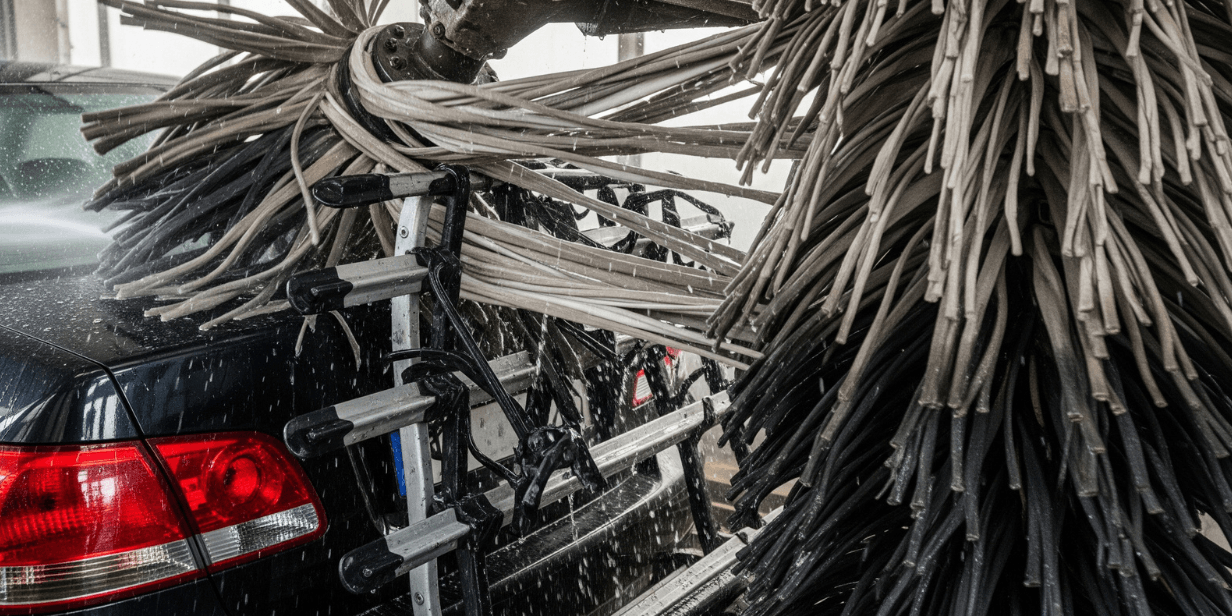
A friction brush is snagged and ripped by a customer’s rear-mounted bike rack. Source: Google AI Image
Consider the math of a minor incident. A tunnel processing 100 cars per hour with an average ticket of $15 generates $1,500 hourly. A mechanical failure caused by a rigid bull bar tearing a brush arm might take three hours to repair. The direct revenue loss is $4,500.
Beyond the immediate loss of throughput, mechanical repairs are a heavy burden. A rigid Bull Bar tearing a brush arm or a Bike Rack snapping a motor shaft can lead to thousands of dollars in replacement parts and emergency technician fees. Furthermore, the reputational damage caused by “tunnel closed” signs can drive recurring members toward competitors.
The core issue is that standard automation systems treat every vehicle as a generic shape. They cannot distinguish between a standard SUV and an SUV equipped with a high-risk accessory. Vehicle Accessories Recognizer changes this equation by providing the site controller with specific data. Instead of reacting to a collision after it happens, the system identifies the accessory and adjusts the wash in real-time—protecting both the equipment and the bottom line.
Targeted Prevention for High-Risk Accessories
The Vehicle Accessories Recognizer acts as an intelligent safety layer for your wash. It goes beyond simple object detection to identify the specific vehicle features that pose a risk to your equipment. When the system spots a hazard at the entrance, it delivers the critical data your site controller needs to trigger the right “defensive” protocol—automatically adapting the wash process to protect both the vehicle and the tunnel.
1. Bike Racks
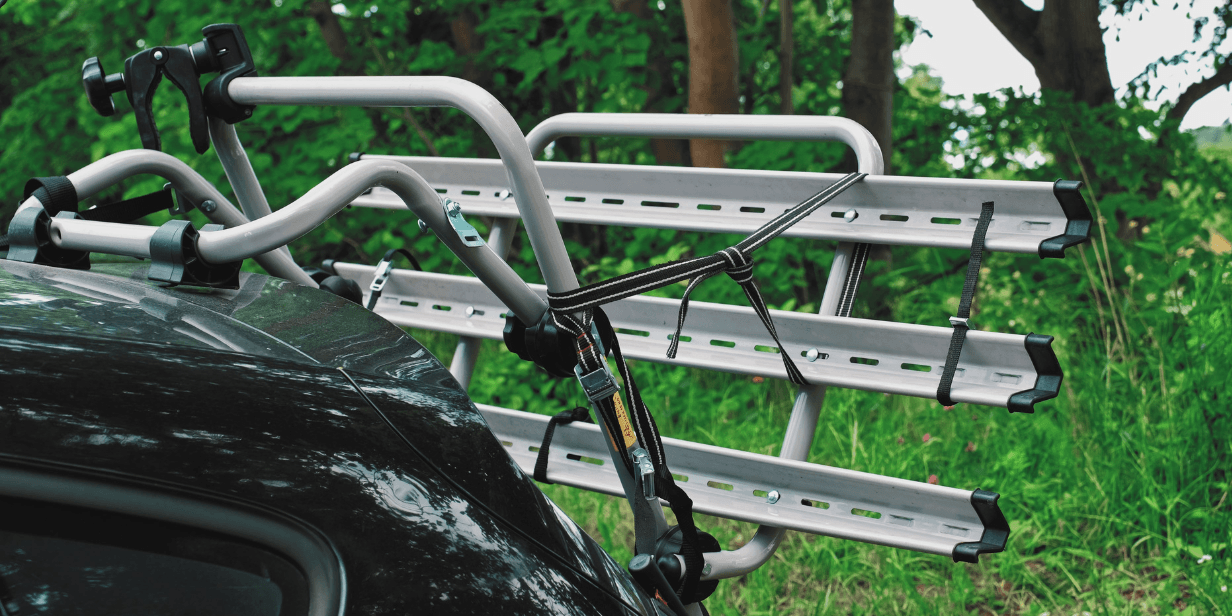
Bike back attached to the rear of a vehicle. Source: Canva
Bike racks create a rigid “hook” hazard at the back of the vehicle. If the AI detects a Bike Rack, it flags the vehicle so the controller can automatically retract the rear brushes. This prevents the filaments from wrapping around the rack and snapping the motor shaft.
2. Roof Racks & Cargo Boxes
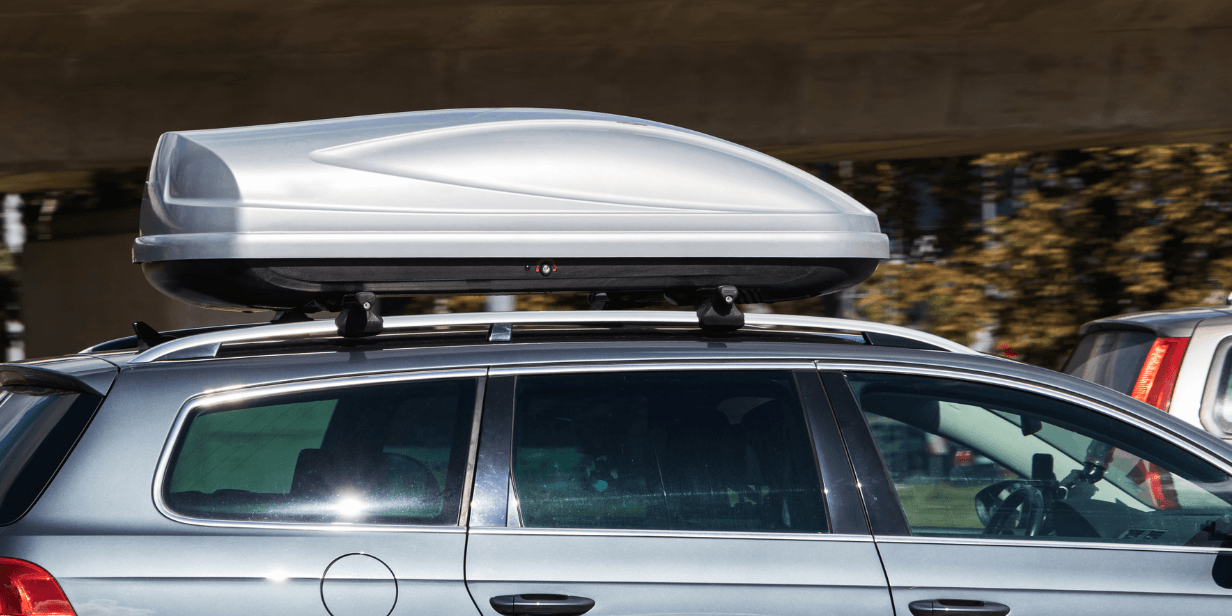
Roof rack with a roofbox accessory attached. Source: Canva
Roof accessories can snag mitter curtains or top brushes. Upon identifying a Roof Rack or Roof Box, the system alerts the controller to keep the top equipment in a “Safety Up” position. This ensures the hood and sides are cleaned while the overhead gear safely clears the obstacle.
3. Open Truck Beds
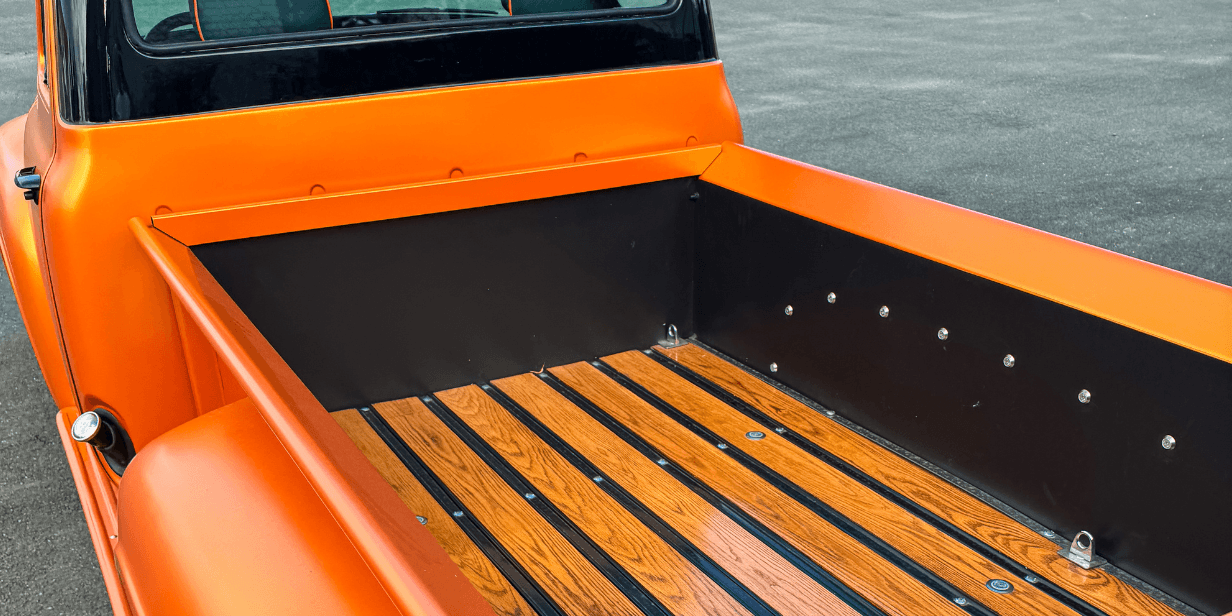
Open truck bed of an orange pickup truck. Source: Canva
High-velocity dryers can turn debris in an open bed into projectiles that crack windshields of trailing cars. When the system identifies an Open Truck Bed, it triggers a “Blower Lockout” command. The dryers temporarily power down or deflect as the truck bed passes, protecting the queue behind it.
4. Grill Guards & Bull Bars
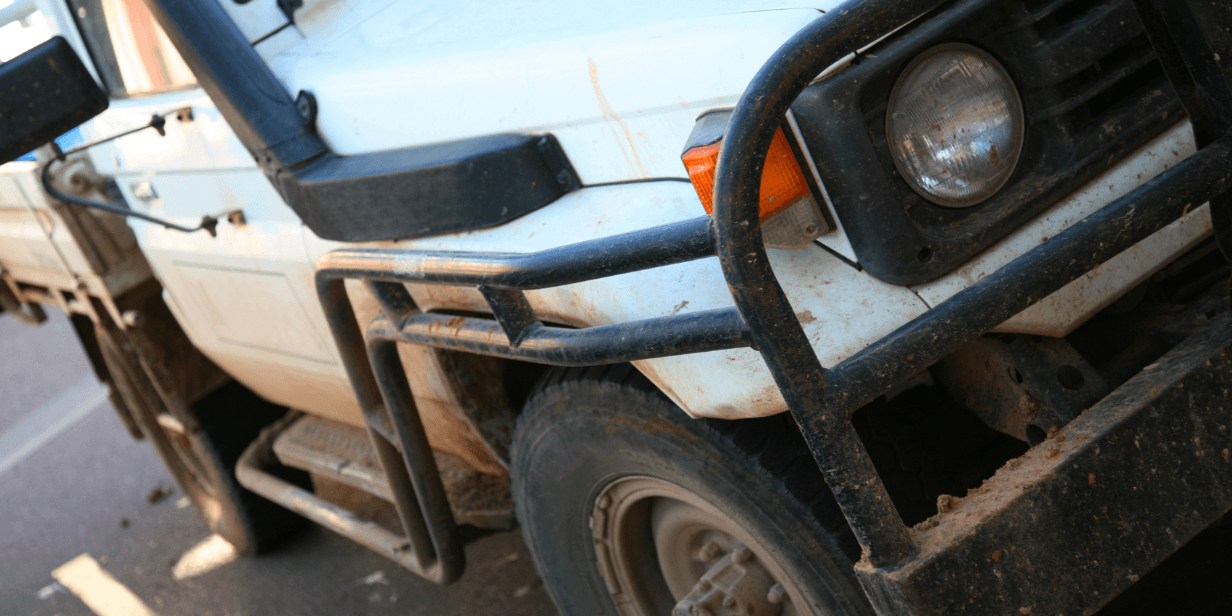
Dirty truck equipped with a grill guard. Source: Canva
Standard sonar sensors often fail to see the thin steel bars of a grill guard, leading to aggressive brush contact that can stall motors. The AI identifies Grill Guards and Bull Bars visually. This data allows the controller to reduce side-brush pressure or bypass the front of the vehicle entirely to avoid impact with the immovable steel.
5. Soft Tops
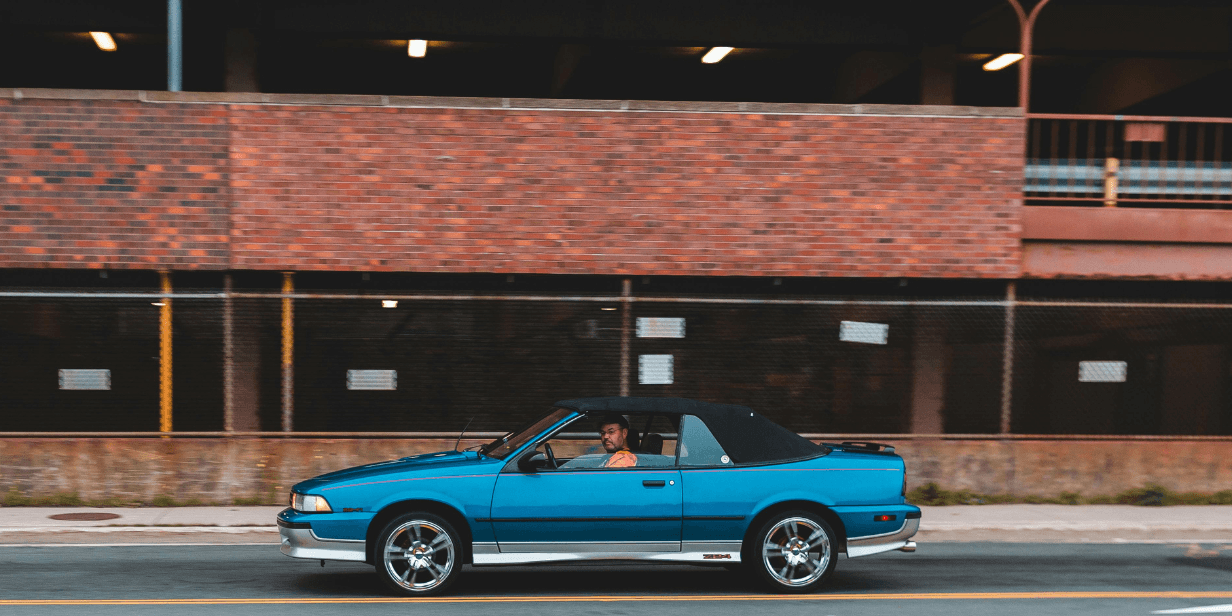
Blue soft top convertible. Source: Canva
Canvas tops are easily damaged by abrasive friction or high-pressure blasts. When the engine detects a Soft Top, it signals the controller to lock out friction packages. The customer receives a “Convertible-Safe” wash without the operator needing to intervene manually.
6. Spare Tires (External Tire Racks)
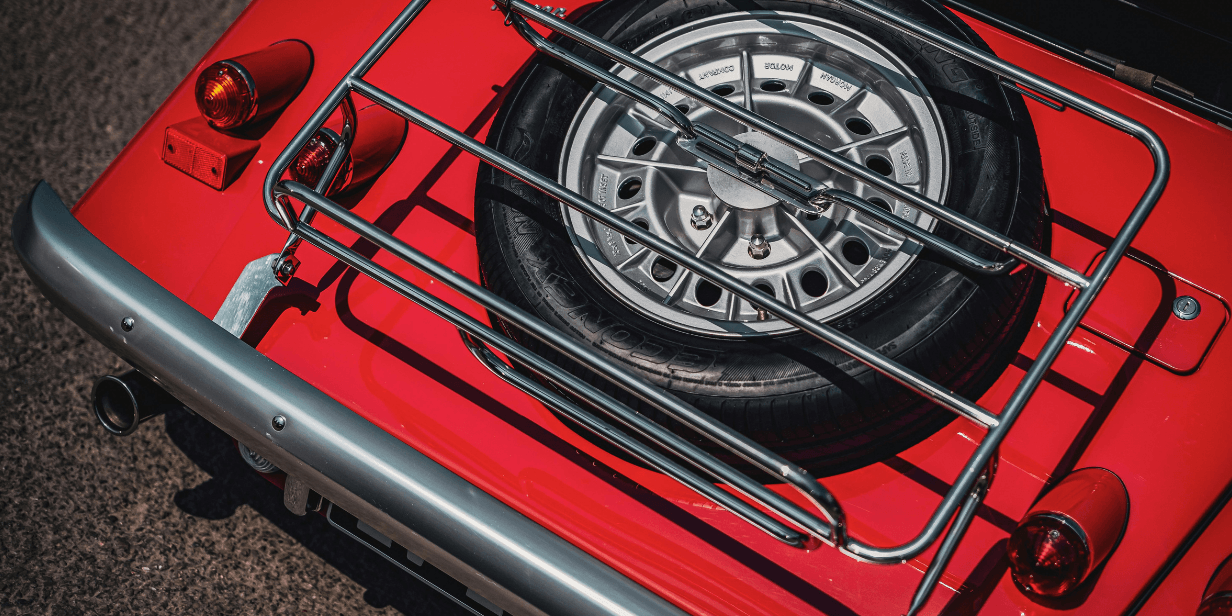
Vintage red car with spare tire in an external rack. Source:Canva
Rear-mounted spare tires confuse standard equipment timing, often causing rear brushes to slam into the tire or dwell too long. Accurate classification of a Tire Rack enables the controller to adjust the wrap timing, ensuring the brush cleans around the tire without getting trapped.
7. Trailer Hitches
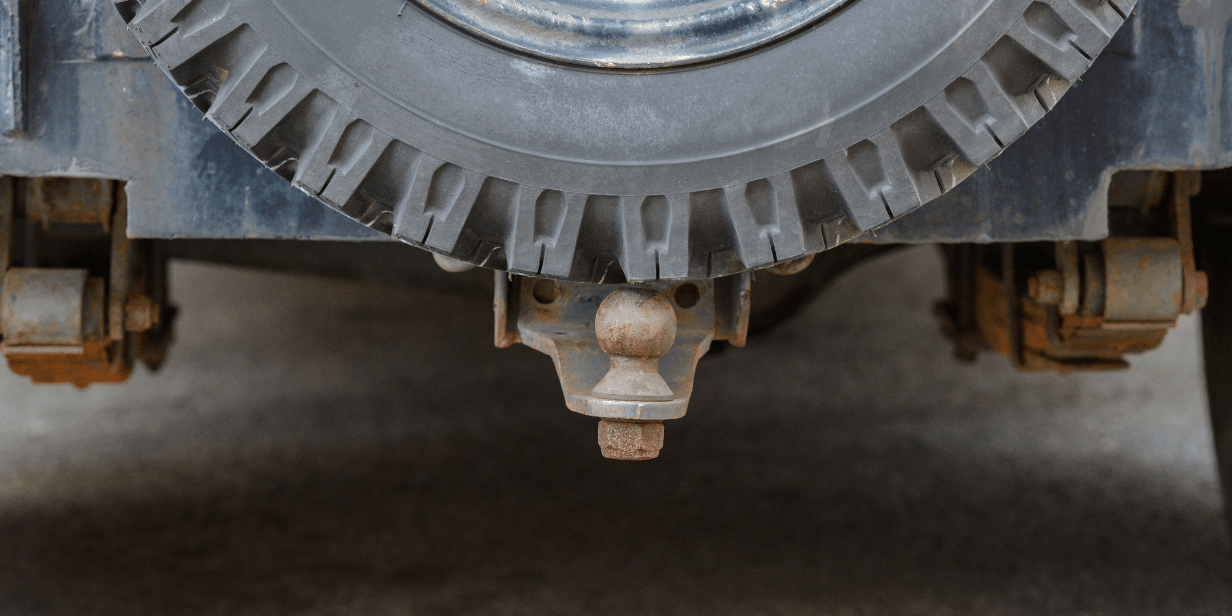
Closeup of trailer hitch. Source: Canva
A protruding ball hitch is a small but dangerous hazard for low-mounted rear cloth. Identification allows the system to adjust the bottom section of the rear brushes, preventing them from snagging on the metal hardware.
9. Antenna
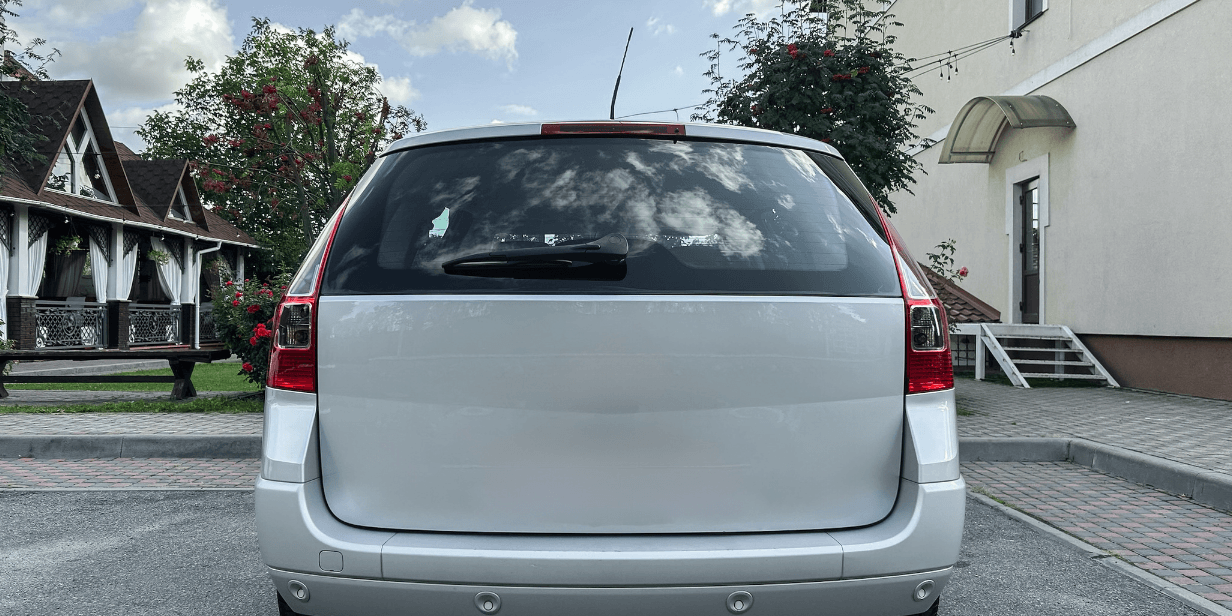
Back view of a car with an antenna. (ladder) Source: Canva
Standard whip and rigid antennas are a frequent source of “snag and snap” incidents, often becoming entangled in friction brushes or broken by top mitters. When the AI identifies an Antenna, the system classifies the vehicle as a snag hazard and automatically signals the site controller to initiate a “Safety Up” protocol. This command prevents top brushes from descending or adjusts wrap-around rotation, protecting the customer’s vehicle from hardware damage and ensuring the tunnel stays clear of broken antenna fragments.
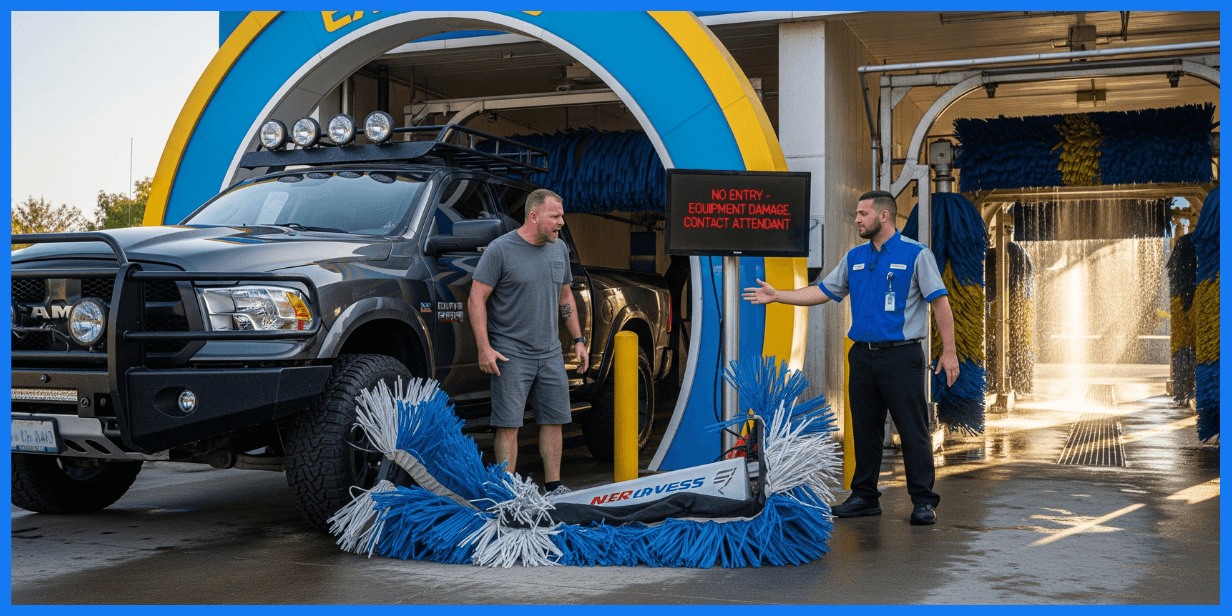
A broken brush lies at the tunnel entrance after a rigid accessory caused equipment failure and stopped the conveyor. Source: Google AI Image
Strategic Implementation of AI for Car Wash Damage Prevention: How It Works
Integrating Vehicle Accessories Recognition requires a seamless flow of data between the camera, the AI engine, and the site controller. Plate Recognizer designed this architecture to be camera-agnostic and developer-friendly.
1. Image Capture
The system utilizes existing IP cameras at the entrance or pay station. New hardware is rarely required.
2. Parallel Processing
While the LPR engine reads the license plate characters, the Attributes engine analyzes the vehicle geometry in the same frame.
3. JSON Data Stream
The system outputs a lightweight JSON payload containing the detected attributes (e.g., {“vehicle_type”: “truck”, “attribute”: “open_bed”, “confidence”: 98%}).
4. Actionable Logic
The site’s tunnel controller or POS receives this data stream and executes the pre-programmed safety protocols (retract, alert, or divert) based on the input.
This process occurs in milliseconds, creating no delay in the entry queue.
Strategic Returns: How AI Reduces Liability and Maximizes Throughput
Investing in AI to prevent car wash damage yields a measurable return. The value proposition extends beyond simple damage avoidance.
Standardization at Scale
Multi-site chains struggle with operational consistency. A site manager in one region may be strict about enforcing rack policies, while another is lenient. This inconsistency confuses customers and exposes the brand to risk. AI provides a centralized, enforceable standard. Corporate leadership can set a policy—”No friction washes for Roof Boxes”—and the system provides the data to enforce it identically across 500 locations, regardless of local staffing levels.
Throughput Maximization
Speed equals revenue. Every manual intervention slows the line. Stopping the conveyor to inspect a truck bed or arguing with a customer about a waiver creates bottlenecks. Automated recognition filters the risks silently. Attendants focus on loading cars safely, while the system manages the exceptions.
Data-Driven Fleet Management
Attribute data allows for smarter business decisions. Operators can analyze their traffic composition with precision.
- Are 30% of customers driving pickup trucks? Marketing efforts can shift to target this demographic.
- Is there a high volume of Soft Tops in the summer? A seasonal, chemical-only wash package can capture this revenue without risk.
Era of Intelligent Washing with AI for Car Wash Damage Prevention
Vehicles entering modern car washes are larger, more customized, and more expensive than ever before. To protect infrastructure and profit margins, the wash process must become as intelligent as the vehicles it services.
AI for Car Wash Damage Prevention is the necessary technology that bridges the gap between customer identity and physical reality. Vehicle Accessories Recognition empowers operators to see the hidden risks in the queue and enables their equipment to act on them automatically. Preventing a single catastrophic tunnel jam pays for the system many times over.
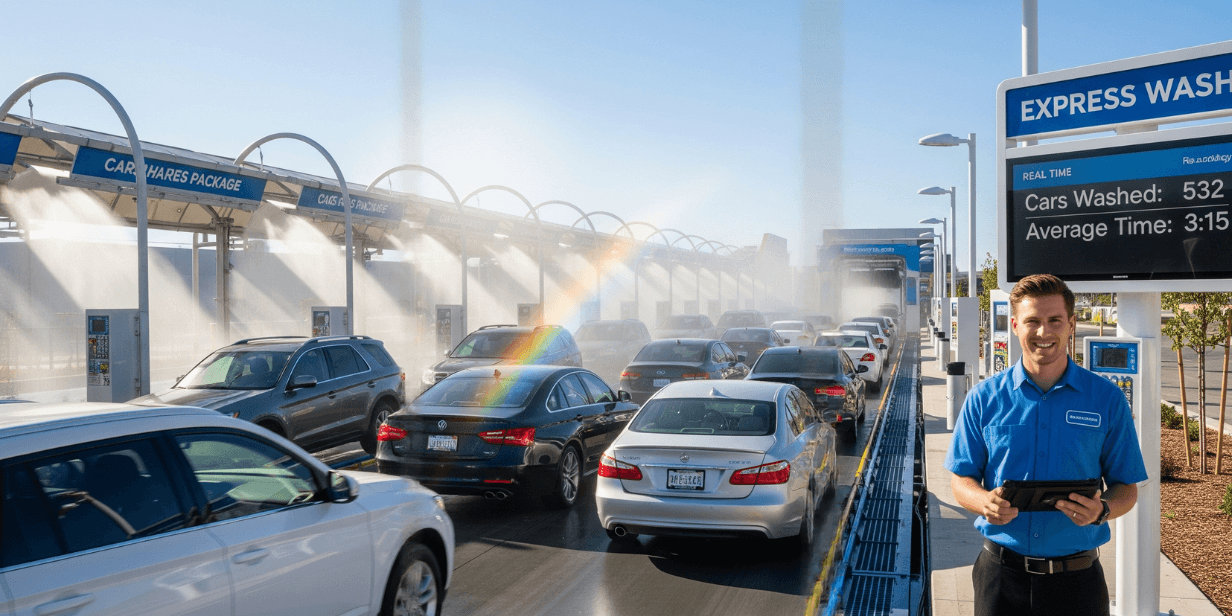
A manager observes the car wash running smoothly at full capacity, demonstrating high throughput and zero downtime. Source: Google AI Image
The future of car washing is automated, safe, and data-driven. Equipment protection is no longer about stronger brushes; it is about smarter eyes.
Plate Recognizer offers a free trial of the Vehicle Accessories Recognizer engine. Operators can test the system on their existing video feeds to quantify the risks currently passing through their tunnels undetected. Request a free trial here.